7 Best Salt-Tolerant Shrubs
The scent of damp, saline earth carries a heavy concentration of sodium chloride that can dehydrate most plant tissues through osmotic stress. You can feel the turgor of a healthy leaf when its vacuoles are fully pressurized; however, in coastal environments, salt spray often causes marginal necrosis and stunted development. Selecting the best salt-tolerant shrubs requires an understanding of halophytic adaptations and cellular resilience. These woody perennials must maintain internal water potential despite high external salinity.
Materials:
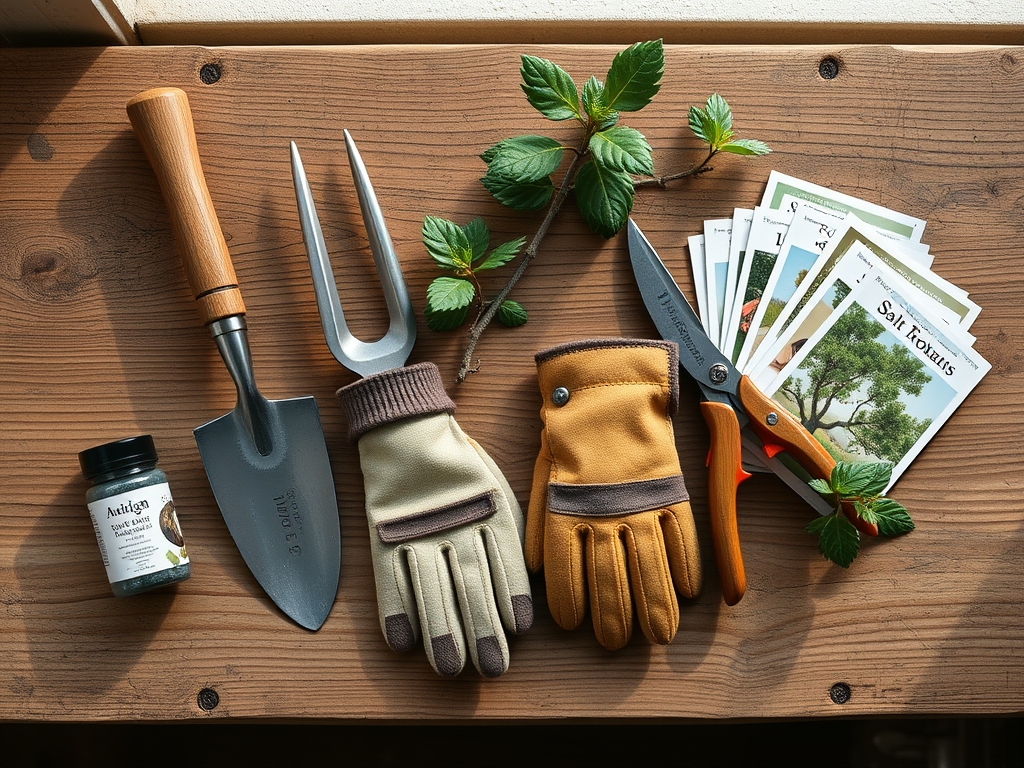
Successful cultivation begins with a **friable loam** or sandy substrate that facilitates rapid drainage to prevent salt accumulation in the **rhizosphere**. Most salt-tolerant species thrive in a soil pH ranging from **6.0 to 7.5**.
- Rugosa Rose (Rosa rugosa): Requires a balanced NPK ratio of 10-10-10 during the initial growth phase. It thrives in sandy soils with a low Cation Exchange Capacity (CEC).
- Bayberry (Morella pensylvanica): Prefers acidic conditions (pH 5.5 to 6.5). As a nitrogen-fixer, it requires minimal nitrogen input but benefits from a 0-10-10 phosphorus-potassium boost.
- Winterberry (Ilex verticillata): Needs a pH of 4.5 to 6.0. Use an acidified fertilizer with an NPK of 4-3-4.
- Oleander (Nerium oleander): Highly adaptable; thrives in pH 6.5 to 7.5. Use a 10-10-10 slow-release formula.
- Sea Buckthorn (Hippophae rhamnoides): Requires well-drained soil with an NPK of 5-10-10 to support fruit production.
- Saltbush (Atriplex canescens): Extremely high tolerance; thrives in alkaline soils (pH 7.0 to 8.5) with negligible nutrient requirements.
- Hydrangea Macrophylla: Specifically the "mophead" varieties. Requires a pH of 5.0 to 5.5 for blue sepals or 6.0 to 6.5 for pink. Use a 15-10-10 ratio in early spring.
Timing:
Hardiness Zones for these species range from Zone 3 to Zone 11. Planting should occur when soil temperatures reach a consistent 55 degrees Fahrenheit. This ensures the "Biological Clock" moves from dormancy into the vegetative stage without the risk of late-season frost damage to new meristematic tissue.
For northern zones (3 to 6), transplanting should be completed at least six weeks before the first hard frost to allow for root establishment. In southern zones (7 to 11), fall planting is preferred to avoid the extreme heat of the summer solstice, which can induce premature senescence in young shrubs.
Phases:

Sowing and Seed Stratification
Many salt-tolerant shrubs, such as Bayberry, require cold stratification at 35 to 40 degrees Fahrenheit for 90 days to break embryo dormancy. Sow seeds at a depth of twice the seed diameter in a sterile starting mix.
Pro-Tip: Maintaining consistent moisture during germination is vital because it regulates gibberellic acid levels. This hormone triggers the production of amylase, which converts stored starches into energy for the emerging radicle.
Transplanting
Dig a hole twice the width of the root ball but no deeper than the original container. Ensure the root flare is visible at the soil surface. Backfill with native soil rather than heavy amendments to encourage roots to penetrate the surrounding site.
Pro-Tip: Apply a mycorrhizal inoculant to the root zone during transplanting. This creates a mycorrhizal symbiosis where fungal hyphae extend the root system's reach, increasing the uptake of phosphorus and water in saline conditions.
Establishing
During the first 12 to 24 months, the primary goal is root expansion. Irrigate deeply to leach excess salts away from the primary root zone. Avoid heavy pruning during this phase to maximize the leaf surface area for photosynthesis.
Pro-Tip: Avoid excessive nitrogen application during the first year to prevent auxin suppression in the roots. High nitrogen levels can prioritize upward vegetative growth at the expense of a robust, stabilizing root architecture.
The Clinic:
Physiological disorders in coastal shrubs often mimic nutrient deficiencies.
Symptom: Interveinal chlorosis (yellowing between leaf veins) on new growth.
Solution: This indicates an Iron (Fe) deficiency, often caused by high pH levels common in coastal sands. Apply chelated iron to the soil.
Symptom: Leaf scorch or "burnt" margins on older leaves.
Solution: This is typically sodium toxicity. Increase irrigation frequency to leach salts from the rhizosphere and apply gypsum (calcium sulfate) to displace sodium ions on soil particles.
Symptom: Stunted growth and dark purple coloration on the underside of leaves.
Solution: Phosphorus deficiency. This often occurs in cold, wet soils where uptake is inhibited. Apply a high-phosphorus "starter" fertilizer.
Fix-It for Nitrogen Chlorosis: If the entire leaf turns pale green or yellow, apply a water-soluble nitrate-based fertilizer. Nitrogen is a mobile nutrient; the plant will sacrifice older leaves to support new growth, leading to a thin canopy if not corrected.
Maintenance:
Precision is required for long-term health. Provide 1.5 inches of water per week at the drip line, rather than at the trunk, to encourage outward root growth. Use a soil moisture meter to ensure the substrate remains at a consistent tension of 10 to 30 centibars.
Utilize a hori-hori knife for weeding to ensure you remove the entire taproot of invasive species without disturbing the shrub's lateral roots. Annual pruning should be performed with sharp bypass pruners to make clean cuts that callus quickly. For species like Rosa rugosa, remove one-third of the oldest canes each winter to stimulate juvenile growth and maintain airflow, which reduces the incidence of fungal pathogens.
The Yield:
For shrubs like Sea Buckthorn or Bayberry, harvesting occurs when the fruit reaches peak color and turgor pressure. Harvest Sea Buckthorn berries after the first light frost, which increases the sugar-to-acid ratio.
To maintain "day-one" freshness for floral yields like Hydrangeas, cut stems at a 45-degree angle in the early morning when the plant is most hydrated. Immediately submerge the stems in 110-degree Fahrenheit water to remove air bubbles from the xylem, ensuring unobstructed water transport to the flower head.
FAQ:
Which shrub is most tolerant of direct salt spray?
Rosa rugosa and Bayberry are the most resilient. They possess thick, leathery cuticles or waxy coatings that prevent sodium ions from penetrating the leaf tissue, making them ideal for frontline coastal exposure.
How do I lower soil pH for salt-tolerant shrubs?
Incorporate elemental sulfur or aluminum sulfate into the soil. Apply at a rate of 1 pound per 100 square feet to drop the pH by one point. Retest the soil every six months to monitor the cation exchange.
Can I use sea salt as a fertilizer?
No. While some trace minerals are present, the high concentration of sodium chloride will cause osmotic shock, dehydrating the plant and collapsing the rhizosphere structure. Use balanced NPK fertilizers specifically formulated for woody perennials.
Why are my salt-tolerant shrubs losing leaves in summer?
This is likely due to extreme drought stress or "salt burn." Even salt-tolerant species require supplemental irrigation during dry spells to flush the soil and maintain turgor pressure within the vascular system.