7 Basic Steps to Donate Garden Surplus
The scent of sun-warmed tomatoes fills the air as you harvest your twentieth pound of Cherokee Purples in a single week. Your neighbors have stopped answering the door. Your countertops groan under the weight of zucchini the size of baseball bats. Learning the steps to donate garden surplus transforms this abundance from a storage problem into community support, connecting your soil's fertility to food security networks that measure impact in tons, not compliments.
Materials
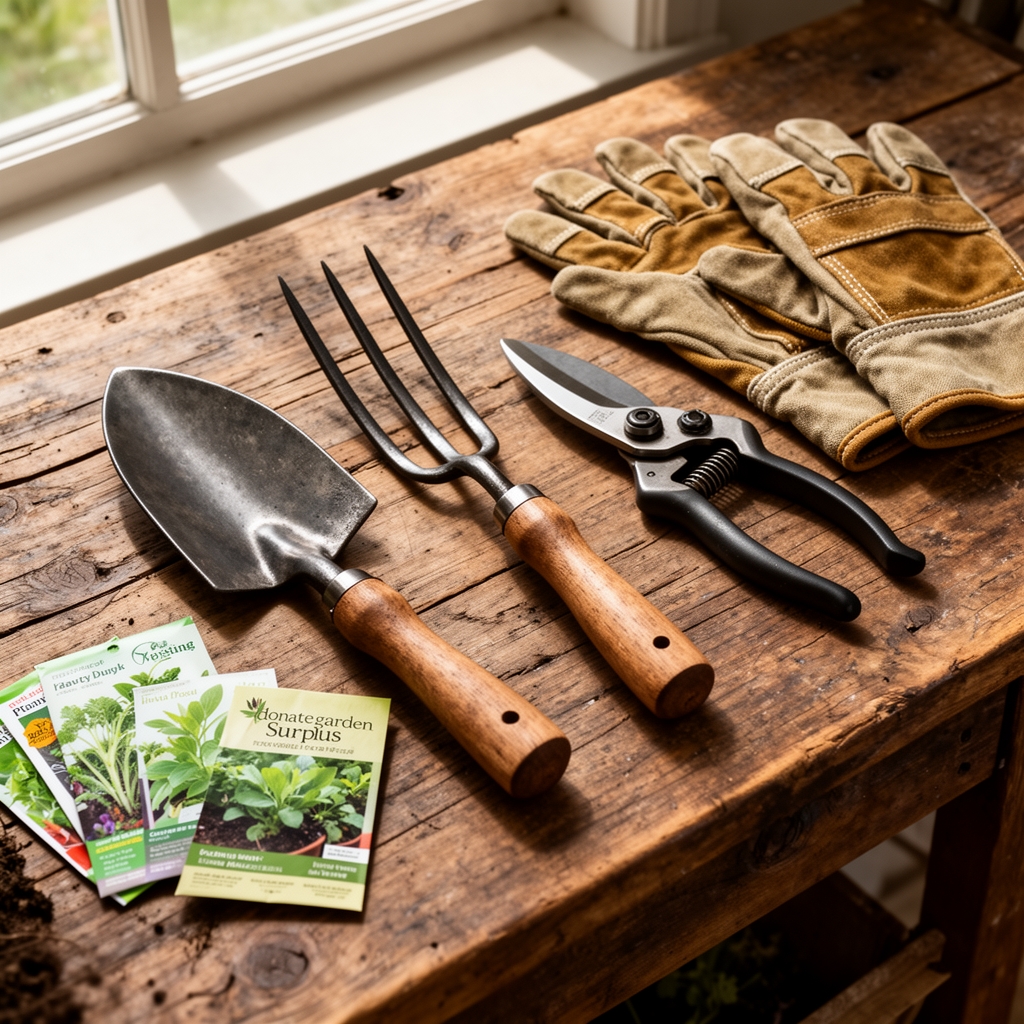
Successful donation programs require harvest tools matched to crop physiology. Bypass pruners with replaceable blades preserve stem integrity on fruiting vegetables. Mesh harvest bags allow ethylene off-gassing, critical for climacteric fruits like tomatoes and melons that continue ripening post-harvest. Food-grade plastic totes, never galvanized metal, prevent pH shifts in acidic crops.
Soil amendments supporting donation-scale production include 5-10-10 granular fertilizer for heavy feeders like squash, applied at 2 pounds per 100 square feet. Alfalfa meal (3-1-2 NPK) supplies slow-release nitrogen while improving cation exchange capacity in clay loams. Mycorrhizal fungi inoculants at transplant establish symbiotic networks that increase phosphorus uptake by 40 percent, boosting yields without synthetic inputs. Maintain soil pH between 6.2 and 6.8 for optimal nutrient availability across most vegetable families.
Digital scales accurate to 0.1 pounds document donation weights for tax deduction purposes. The IRS requires contemporaneous records linking harvest dates to delivered quantities.
Timing
Hardiness zones dictate donation windows. Zone 5 gardeners harvest cool-season crops from May through June, then again September through October. Zone 7 extends spring harvests into early July, with fall plantings yielding through November. Zone 9 maintains year-round production, rotating brassicas and legumes through winter months.
Succession planting every 14 days creates continuous donation streams rather than single gluts. Plant bush beans on April 15, May 1, and May 15 in Zone 6 for harvests spanning July through September. This rhythm matches food pantry distribution schedules better than single 80-pound harvests.
Contact receiving organizations six weeks before first anticipated harvest. Most food banks operate centralized warehouse systems requiring advance logistics planning. Community-supported agriculture drop sites accept donations during regular pickup hours, typically Wednesday and Saturday mornings.
Phases
Harvest Phase: Cut fruiting vegetables during morning hours when cell turgor pressure peaks. Internal temperatures 10 degrees cooler than midday reduce respiration rates, extending shelf life by 2-3 days. Use clean, sanitized tools between plant families to prevent cross-contamination of bacterial soft rot.
Pro-Tip: Dip pruning blades in 10 percent bleach solution every 15 minutes during harvest. This protocol reduces pathogen transmission by 85 percent in high-density plantings.
Processing Phase: Remove field heat within two hours of harvest. Rinse root vegetables in potable water to eliminate soil particles that harbor spoilage organisms. Pat leafy greens dry; excess moisture accelerates chlorophyll breakdown and promotes Botrytis growth. Sort produce by ripeness stage, separating firm tomatoes for extended storage from fully ripe specimens requiring same-day distribution.
Pro-Tip: Store summer squash at 50-55°F rather than refrigeration temperatures. Cold damage manifests as pitting and accelerated decay in cucurbit fruits held below 45°F.
Transport Phase: Deliver produce within four hours of harvest during summer months. Stack containers to allow air circulation; solid stacking creates anaerobic pockets where ethylene concentrations reach phytotoxic levels. Transport leafy greens in coolers with ice packs, maintaining temperatures between 35-40°F to preserve ascorbic acid content.
Pro-Tip: Line transport containers with newspaper to absorb condensation. Moisture accumulation during temperature transitions causes 30 percent of post-harvest losses in donated produce.
Troubleshooting
Symptom: Blossom end rot appears on tomatoes and peppers scheduled for donation.
Solution: Apply calcium nitrate foliar spray (2 tablespoons per gallon) weekly. Maintain consistent soil moisture; fluctuations disrupt calcium transport through xylem tissue. Mulch with 3 inches of straw to buffer moisture extremes.
Symptom: Squash vine borer damage reduces harvestable yields by 60 percent.
Solution: Inject Bacillus thuringiensis (Bt) into stem bases at 10-day intervals starting at bloom. Bury vine nodes under 2 inches of soil to promote adventitious rooting past borer damage zones.
Symptom: Cucumber beetles vector bacterial wilt, collapsing plants pre-harvest.
Solution: Apply kaolin clay (Surround) weekly, creating protective particle film. Remove and destroy infected plants immediately; the pathogen persists in beetle digestive systems for 30 days.
Symptom: Powdery mildew reduces photosynthetic capacity on cucurbit leaves.
Solution: Spray potassium bicarbonate solution (1 tablespoon per gallon plus 1 teaspoon horticultural oil) at 7-day intervals. Maintain 24-inch plant spacing for airflow; dense plantings create 90 percent humidity microclimates favoring fungal reproduction.
Maintenance
Water donation gardens with 1 inch per week, delivered in a single deep watering session. Shallow frequent irrigation produces surface roots vulnerable to heat stress. Install soaker hoses 2 inches below mulch layer for 85 percent water efficiency versus overhead sprinklers.
Side-dress nitrogen at 0.1 pounds per 10 feet of row when fruiting begins. Excess nitrogen delays maturity and produces succulent growth attractive to aphids. Monitor tissue nitrogen through petiole sap testing; maintain nitrate-nitrogen between 800-1200 ppm for optimal production without quality loss.
Harvest every 48 hours during peak season. Overripe produce left on plants triggers abscission hormone cascades that shut down further flowering through auxin redistribution.
FAQ
How much can I deduct for donated produce?
The IRS allows fair market value deductions up to $250 without appraisal. Track harvest weights and compare to local farmers market prices for documentation.
Which crops ship best?
Root vegetables, winter squash, and storage onions tolerate handling stress. Avoid delicate raspberries and ripe figs unless delivering within one hour.
Do food banks accept imperfect produce?
Most programs welcome cosmetically imperfect produce meeting safety standards. Confirm individual policies on cracked tomatoes and scarred peppers.
When should I stop donations?
Cease donations when night temperatures drop below 40°F. Cold-damaged produce develops off-flavors and creates sorting burdens for receiving organizations.
Can I donate perennial crops?
Asparagus, rhubarb, and berry crops qualify. Harvest only the current year's growth, leaving sufficient foliage for carbohydrate storage and next season's productivity.