6 Simple Ways How to Weigh Garden Harvests
Weighing garden harvests transforms abstract labor into quantifiable yield data. The simple act of recording mass provides clarity on soil amendments, cultivar selection, and seasonal timing. Gardeners who track weights year over year can correlate NPK ratios with output, isolate variables, and replicate success. Learning how to weigh garden harvests requires calibrated scales, staging protocols, and systematic records that convert anecdotal observation into reproducible science.
Materials
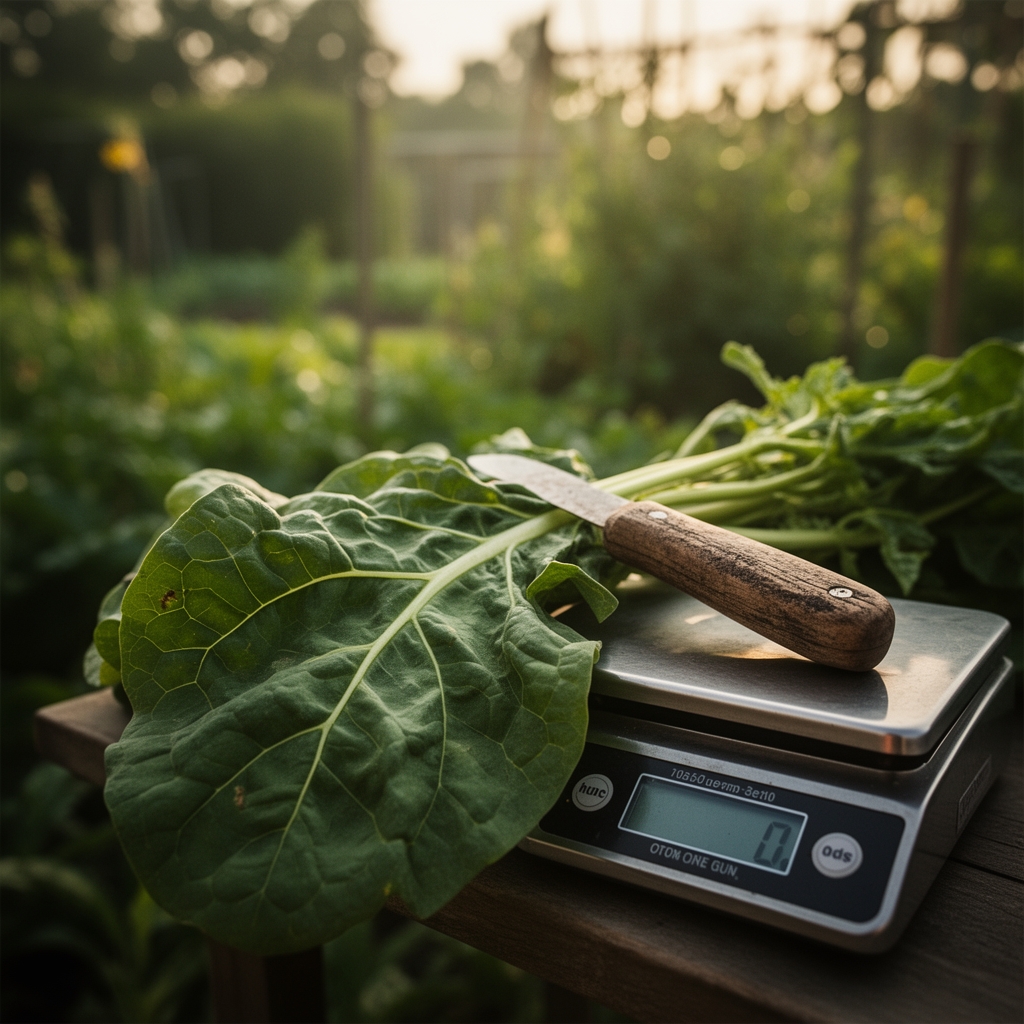
Three scale categories serve distinct functions. Digital kitchen scales (0.1-gram precision) handle herbs, cherry tomatoes, and salad greens up to 11 pounds. Hanging spring scales (20-pound capacity) suit zucchini, peppers, and bundled root vegetables. Platform bench scales (100-pound capacity) accommodate squash, pumpkins, and aggregate weekly hauls. Calibration weights verify accuracy before each harvest window.
Containers must subtract cleanly from total mass. Wire mesh baskets, colanders, and reusable cloth bags provide known tare weights. Label each container with permanent marker. Record tare values in a field notebook or spreadsheet.
Soil amendments influence density. A 4-4-4 organic meal supports moderate nitrogen, phosphorus, and potassium availability. Higher phosphorus (5-10-5) increases fruit set in solanaceous crops. Cation exchange capacity above 15 meq/100g improves nutrient retention, yielding denser, heavier produce. Mycorrhizal fungi colonization expands root surface area by 10-100 times, enhancing water and micronutrient uptake that translates to measurable weight gain.
Timing
Hardiness zones dictate harvest windows. Zones 3-5 typically see main harvest from late July through September. Zones 6-8 extend from June to October. Zone 9 gardeners harvest year-round, with peak mass accumulation in spring and fall when auxin distribution favors cell expansion over lignification.
Frost-date windows bracket outdoor growing seasons. Plant cool-season crops (peas, lettuce, brassicas) two weeks before the last spring frost. Warm-season crops (tomatoes, cucurbits, beans) require soil temperatures above 60°F. Harvest before the first fall frost for frost-sensitive species. Weigh crops at maturity, defined by days-to-harvest on seed packets, adjusted for microclimate and soil fertility.
Phases
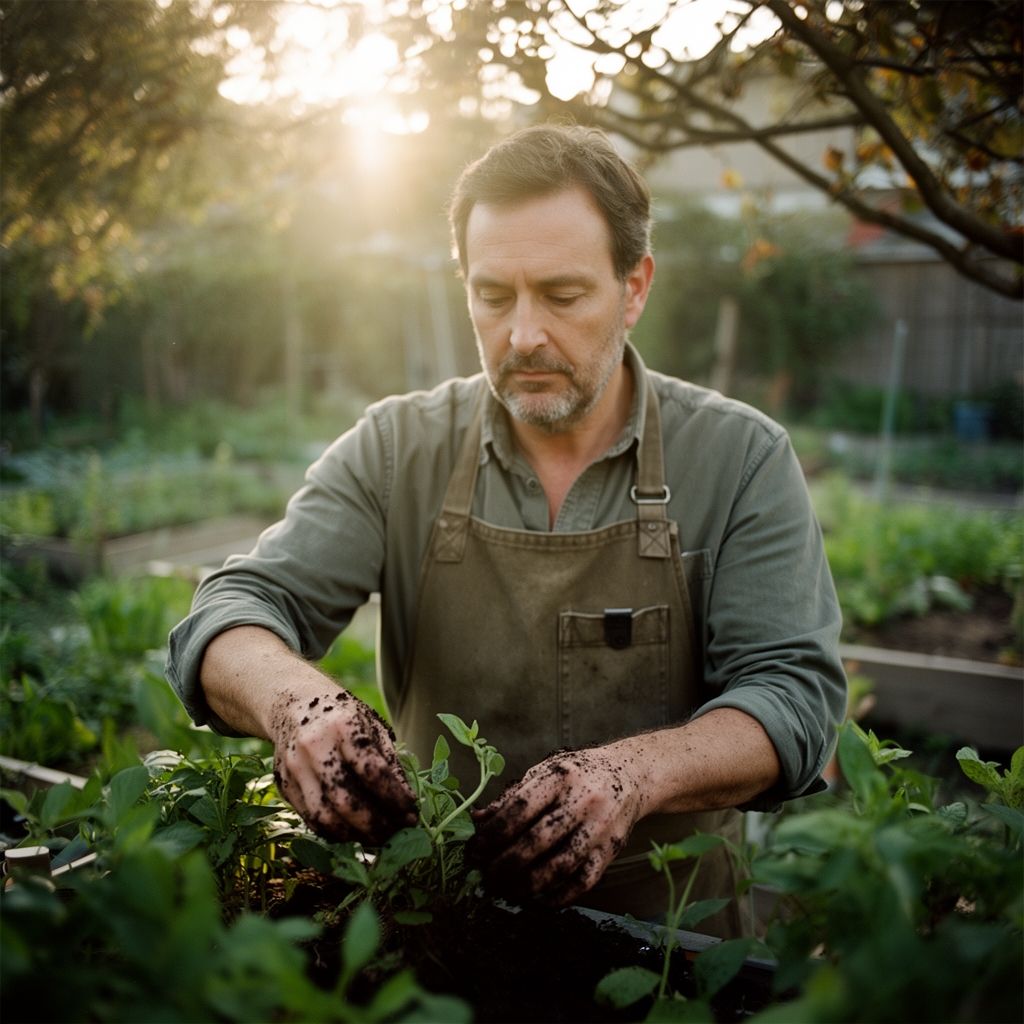
Sowing: Direct-seed large-seeded crops (beans, squash, sunflowers) at twice the seed diameter depth. Small seeds (carrots, lettuce) need light for germination; press into surface, cover with 1/8 inch fine compost. Maintain consistent moisture in the top 2 inches until emergence. Soil pH between 6.0 and 7.0 optimizes nutrient availability.
Pro-Tip: Inoculate legume seeds with Rhizobium bacteria to fix atmospheric nitrogen, increasing protein content and seed weight by 15-30%.
Transplanting: Harden off seedlings over seven days, gradually increasing sun exposure and reducing water. Transplant in late afternoon or on overcast days to minimize transpiration shock. Dig holes twice the root ball width. Amend with compost at a 1:3 ratio with native soil. Water immediately with 1 pint per plant.
Pro-Tip: Prune tomato seedlings at a 45-degree angle above the second true leaf to stimulate lateral branching and increase fruit sites by 40%.
Establishing: Roots establish in 10-21 days, depending on species and soil temperature. Mulch with 2-3 inches of straw or shredded leaves to stabilize soil moisture and suppress weeds. Side-dress with 1/4 cup of 10-10-10 granular fertilizer per plant at four weeks post-transplant. Monitor leaf color: dark green indicates adequate nitrogen, pale green signals deficiency.
Pro-Tip: Foliar spray with kelp extract (1 tablespoon per gallon) every 14 days during vegetative growth to boost trace minerals and increase cell turgor, improving final harvest weight by 8-12%.
Troubleshooting
Symptom: Blossom end rot manifests as dark, sunken lesions on tomato and pepper fruits.
Solution: Maintain consistent soil moisture. Apply calcium sulfate (gypsum) at 2 pounds per 100 square feet. Avoid high-nitrogen fertilizers that inhibit calcium uptake.
Symptom: Powdery mildew forms white, talc-like patches on cucurbit leaves.
Solution: Space plants 24 inches apart for airflow. Spray with 1 tablespoon baking soda plus 1 teaspoon insecticidal soap per gallon water weekly. Remove infected leaves.
Symptom: Aphid colonies cluster on shoot tips, excreting honeydew.
Solution: Release Aphidius colemani parasitoid wasps at 1 per square foot. Spray insecticidal soap (2% concentration) on contact, repeating every five days.
Symptom: Nitrogen deficiency causes lower leaves to yellow and drop.
Solution: Top-dress with blood meal (12-0-0) at 1 pound per 100 square feet. Water in thoroughly. Reapply every three weeks until foliage greens.
Symptom: Cracking in tomatoes occurs after irregular watering.
Solution: Irrigate deeply twice weekly rather than shallow daily watering. Mulch heavily. Select crack-resistant cultivars.
Maintenance
Irrigate to maintain soil moisture at field capacity, approximately 1 inch of water per week. Use a rain gauge to measure. Sandy soils require twice-weekly irrigation; clay soils tolerate once-weekly. Drip irrigation delivers water at 0.5 gallons per hour per emitter, minimizing foliar disease.
Fertilize every four weeks during active growth. Apply 1/2 cup of 5-10-10 per 10 feet of row for fruiting crops. Leafy greens prefer 1/4 cup of 8-4-4. Broadcast evenly, water in, and avoid direct contact with stems.
Weed weekly to reduce competition. Hand-pull when soil is moist. Hoe shallowly to avoid root damage. A 3-inch mulch layer reduces weed germination by 90%.
Stake indeterminate tomatoes and pole beans to prevent fruit ground contact. Use 6-foot stakes, tying plants with soft twine at 12-inch intervals.
FAQ
How accurate do scales need to be for home gardens?
Kitchen scales with 1-gram precision suffice for herbs and salad greens. Platform scales accurate to 0.1 pounds work for vegetables over 5 pounds.
When is the best time to weigh harvests?
Immediately after picking, before moisture loss. Morning harvests retain maximum turgor. Weigh within 15 minutes for accuracy.
Should I weigh produce wet or dry?
Weigh dry or consistently damp. Washing adds 5-10% mass. Pat dry with towels before weighing for reproducible data.
How do I track yields over multiple seasons?
Use spreadsheets with columns for date, crop, cultivar, bed number, and weight. Calculate pounds per square foot annually. Correlate with amendment records.
Does weighing damage delicate crops?
No. Use shallow baskets or colanders. Handle berries and leafy greens gently. Weigh in small batches to prevent bruising.