9 Easy Ways How to Make Apple butter
The scent of slow-simmered apples drifts through the kitchen each autumn, clinging to curtains and memory alike. This concentrated spread transforms bushels of fresh fruit into a dark, spiced preserve that stores through winter. Learning how to make apple butter requires no special equipment beyond a heavy pot, patience, and an understanding of pectin breakdown at sustained heat. The process dates to colonial America, where Germanic settlers in Pennsylvania refined techniques for reducing apple sauce into a shelf-stable spread without added pectin.
Materials
Select apple varieties with balanced acidity and sugar content. Winesap, Jonathan, and Stayman cultivars contain pH levels between 3.3 and 3.5, ideal for preservation. For every 5 pounds of prepared apples, plan for 2 cups of sugar (adjust to 1.5 cups if using sweeter varieties like Fuji), 1 tablespoon ground cinnamon, 1 teaspoon ground cloves, and 1/2 teaspoon ground allspice. Apple cider vinegar at 2 tablespoons per batch enhances acidity to pH 3.2, inhibiting botulism spores.
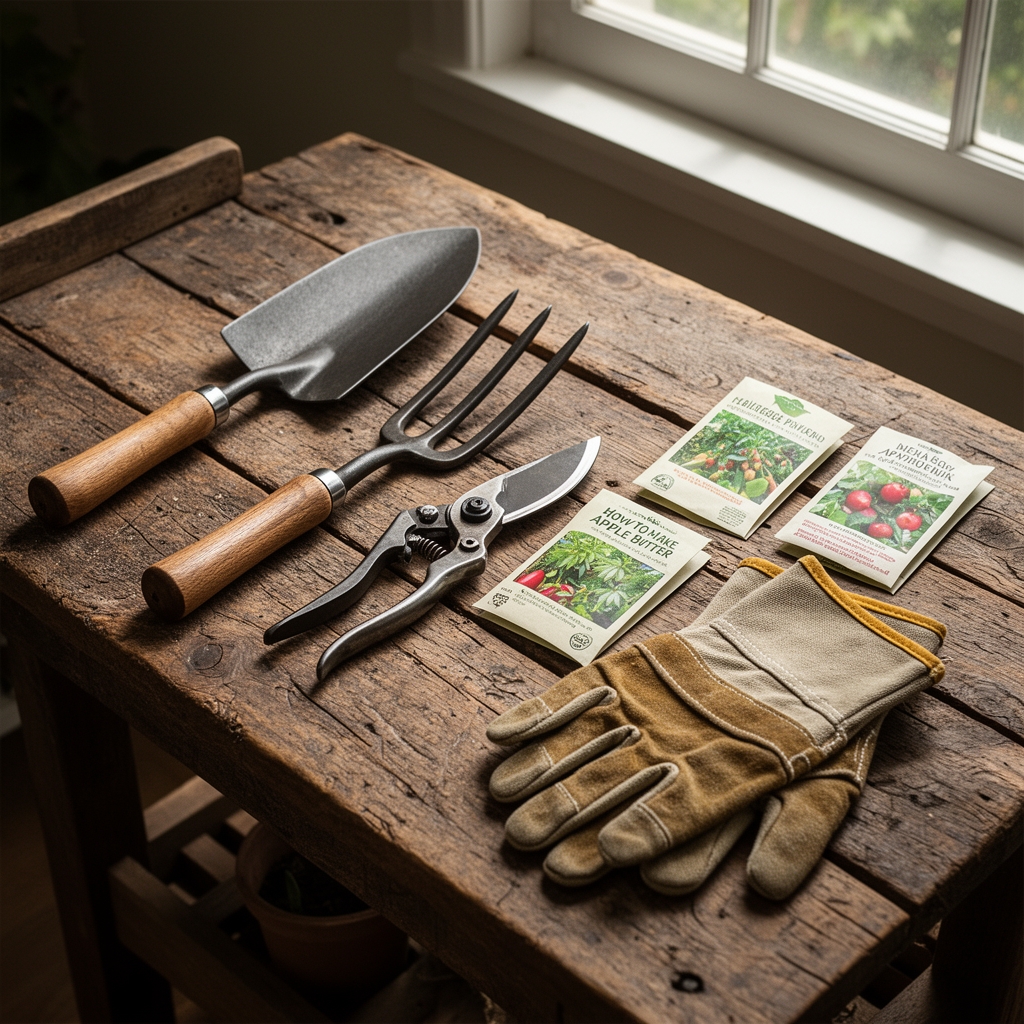
Equipment demands are minimal but specific. A 6-quart stainless steel or enameled cast-iron pot provides even heat distribution and prevents reactive metallic flavors. Wooden spoons resist heat damage during extended stirring. Immersion blenders or food mills create smooth texture after initial cooking. Half-pint canning jars with two-piece lids, a water-bath canner, and a jar lifter complete the preservation setup.
The soil connection matters for home orchardists. Apple trees thrive in loam with cation exchange capacity above 10 meq/100g. Annual applications of 4-4-4 organic fertilizer in early spring support fruiting without excessive vegetative growth. Compost adds micronutrients and improves water retention to 1.5 inches per week during fruit development.
Timing
Apple butter production aligns with regional harvest schedules. In USDA Hardiness Zones 5 through 7, peak apple maturity occurs from late September through October. Zones 8 and 9 see harvest windows shift to August and early September. Frost dates dictate storage apple selection. Varieties picked two weeks before first frost develop starches that convert to sugars during cold storage, intensifying flavor for butter made in November or December.
Orchard timing begins months earlier. Apples require 100 to 180 chill hours below 45°F to break dormancy. Bloom occurs 3 to 4 weeks after the last spring frost. Hand-thinning fruit to 6-inch spacing in June concentrates auxin distribution into fewer apples, increasing individual size and sugar density. This improves butter yield per pound of fruit.
Phases
Sowing (Orchard Establishment): Plant bare-root apple stock in early spring when soil temperature reaches 45°F at 6-inch depth. Dig holes twice the width of root spread. Position graft union 2 inches above soil line. Inoculate root zones with mycorrhizal fungi (Rhizophagus irregularis) at 2 ounces per tree to enhance phosphorus uptake and drought tolerance.
Pro-Tip: Prune central leaders to 30-degree angles during the second dormant season. This encourages lateral scaffold development and earlier fruit production.
Transplanting (Fruit Preparation): Wash apples thoroughly. Core and quarter without peeling; skins contain concentrated pectin and tannins that enrich final color and body. Fill the pot to two-thirds capacity. Peels darken the butter to mahogany hues during reduction. Add 1 cup of water to prevent scorching before natural juices release.
Pro-Tip: Include 10 percent crabapples in the mix. Their higher malic acid content (pH 2.9) balances sweetness and acts as a natural preservative.
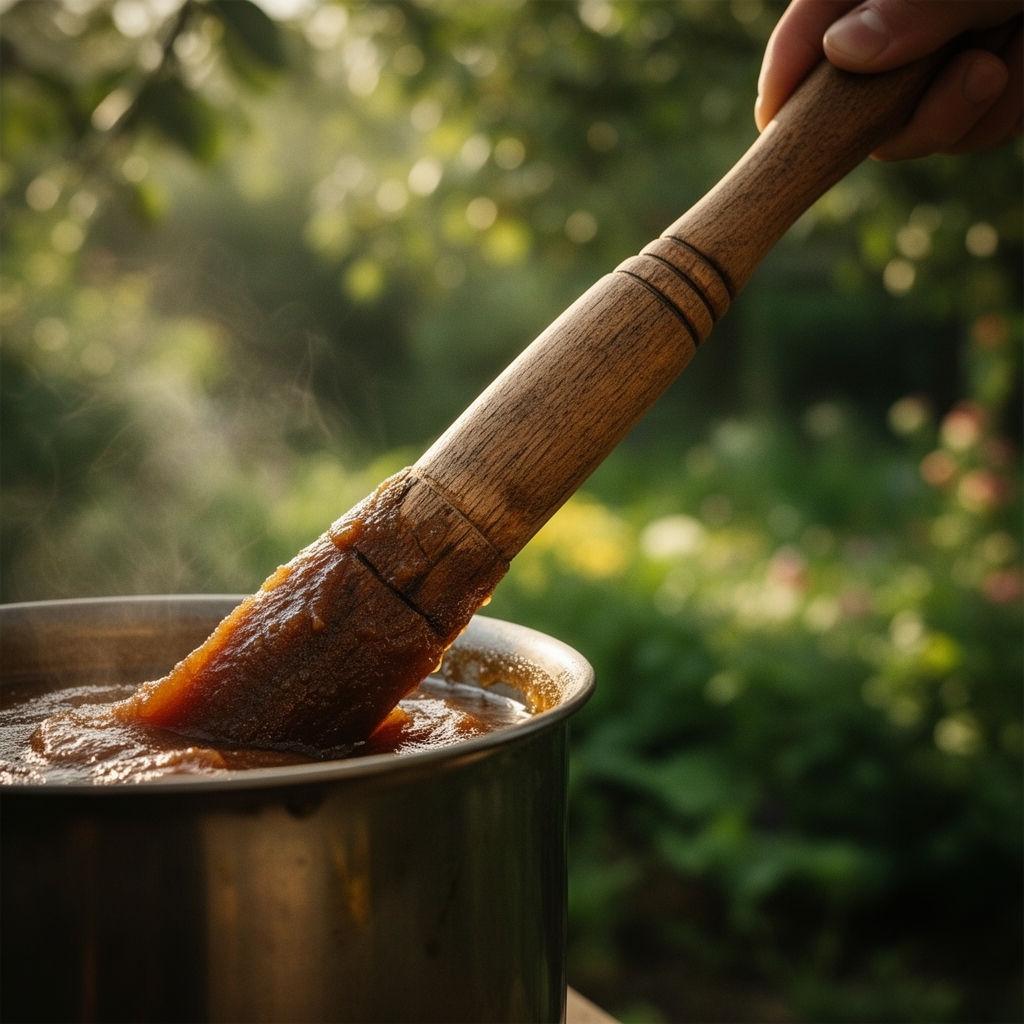
Establishing (Cooking and Reduction): Simmer covered over medium heat for 90 minutes until apples disintegrate. Puree with immersion blender to desired smoothness. Add sugar and spices. Reduce heat to low. Cook uncovered for 4 to 6 hours, stirring every 15 minutes to prevent bottom scorching. The butter reaches completion when a spoonful mounds on a chilled plate without releasing liquid. Temperature should register 215°F on a candy thermometer.
Pro-Tip: Oven-finishing at 250°F in a shallow roasting pan eliminates constant stirring. Stir every 30 minutes for 3 hours.
Troubleshooting
Symptom: Runny consistency after cooling.
Solution: Pectin breakdown was incomplete. Return mixture to heat and reduce for an additional 45 minutes. Test gel point by freezing a spoonful for 2 minutes.
Symptom: Scorched flavor or dark bottom layer.
Solution: Heat was too high or stirring was insufficient. Use a heat diffuser under the pot. Maintain temperature between 200°F and 215°F.
Symptom: Mold growth on stored jars.
Solution: Processing time in water bath was inadequate. Re-sterilize jars and process half-pints for 10 minutes at sea level (add 1 minute per 1,000 feet elevation).
Symptom: Crystallized sugar texture after one month.
Solution: Sugar ratio exceeded fruit capacity. Reduce sugar to 1 cup per 5 pounds for future batches or add 1 tablespoon lemon juice per quart to increase acidity.
Symptom: Separation of liquid and solids in jar.
Solution: Jars cooled too rapidly. After processing, leave jars in canner with heat off for 5 minutes before removing.
Maintenance
Store sealed jars in a dark pantry between 50°F and 70°F. Consume within 18 months for peak flavor. Refrigerate after opening and use within 3 weeks. Check seals monthly; lids should resist flexing when pressed. Any bulging indicates bacterial activity. Discard immediately.
For orchardists, maintain tree health with dormant oil sprays in late winter to suppress overwintering pests. Apply 1 inch of water weekly during fruit swell from June through August. Mulch with 3 inches of wood chips in a 4-foot diameter around trunks, keeping material 6 inches from bark to prevent crown rot.
FAQ
How many apples are needed for one batch?
Five pounds of whole apples yield approximately four half-pint jars after cooking loss and reduction.
Can I make apple butter in a slow cooker?
Yes. Cook on low for 10 hours with the lid vented. Stir every 2 hours.
Why does my apple butter taste bland?
Spice ratios were too conservative or apples lacked acidity. Increase cinnamon to 2 tablespoons and add 1 teaspoon of lemon zest.
Is added pectin necessary?
No. Extended cooking breaks down cellular pectin naturally. Added commercial pectin creates jam texture rather than smooth butter.
What causes pink discoloration?
Anthocyanin pigments from red apple skins reacted with metal. Use non-reactive cookware only. The color is safe to eat.